The Free Patriot
...and he that hath no sword, let him sell his garment, and buy one. — Luke 22:36
Flying with Firearms
Updated for 2026
You need to travel by plane, and you need to take your gun and ammunition with you?
It's legal. It's much simpler if you show up prepared. As a service to our readers:
Flying with Firearms: the current steps
Throughout the process, when in doubt, ask for a supervisor.
- Print your airline's firearms policy. Get three copies, with the company logo and the web address visible on the page. Ask the airline about any fee or ammunition limit before you leave the house.
- Print the TSA firearms page. Three copies.
- Laminate one airline page and one TSA page back to back. Keep that card in your carry-on. The other copies are for the people who have never seen their own policy. Every time I have flown with a weapon, someone has asked to keep the copy I brought, so make three.
You need a hard-sided case that locks and cannot be pried open. The plastic box the pistol came in is often not enough. TSA says so in plain words: the container the firearm was in when you bought it may not adequately secure it. Buy a real case. A padlock or a TSA-recognized lock is fine. Only you keep the key or the combination, unless a TSA officer asks for it to open the case.
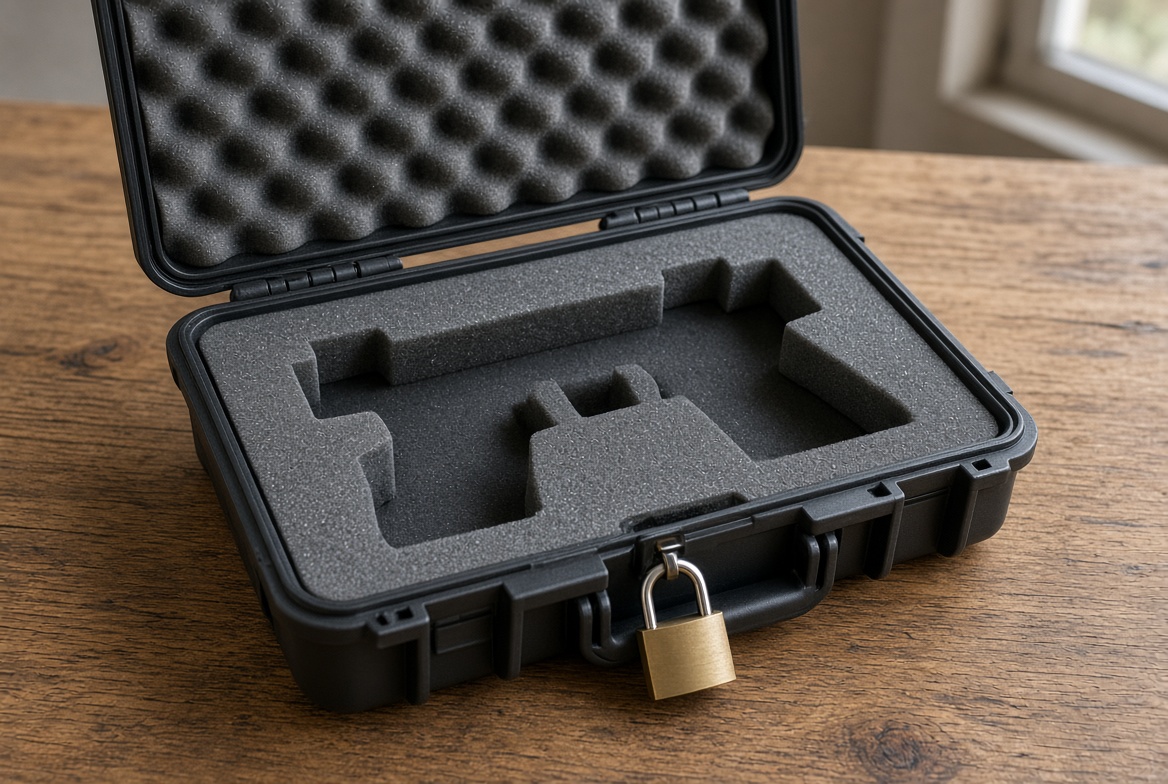
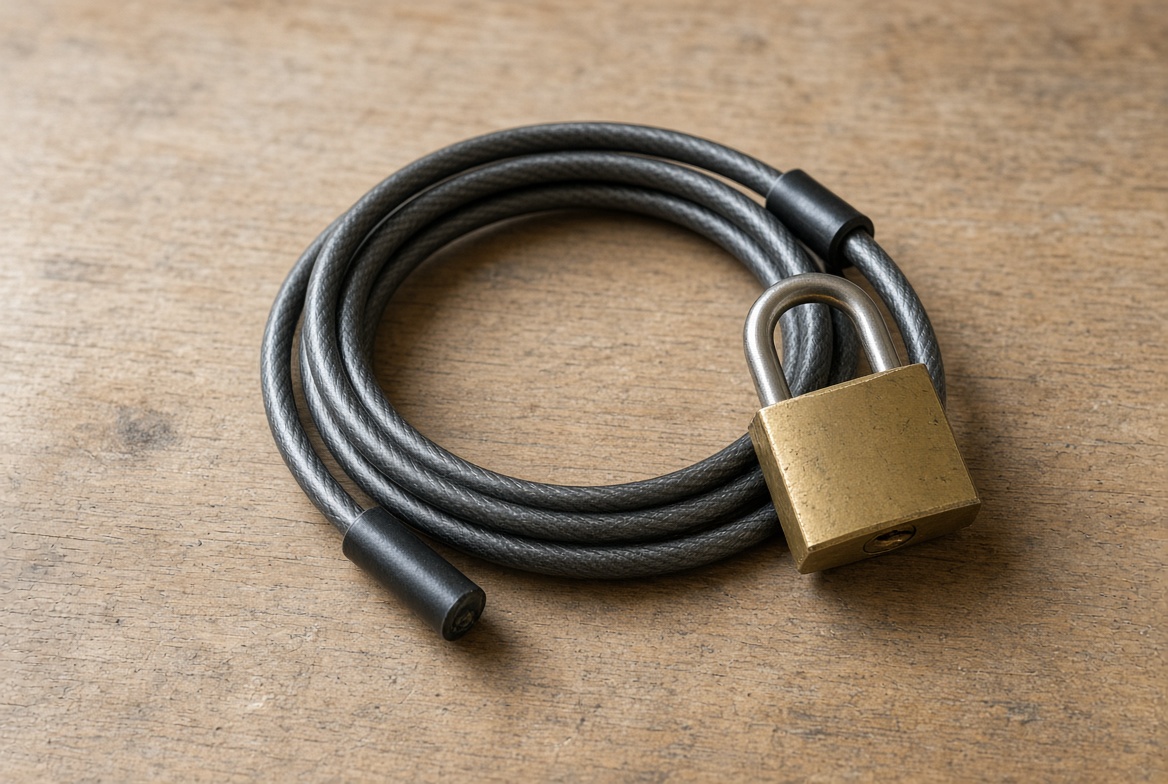
A cable lock through the action is still a good habit. It is not a substitute for the locked case.
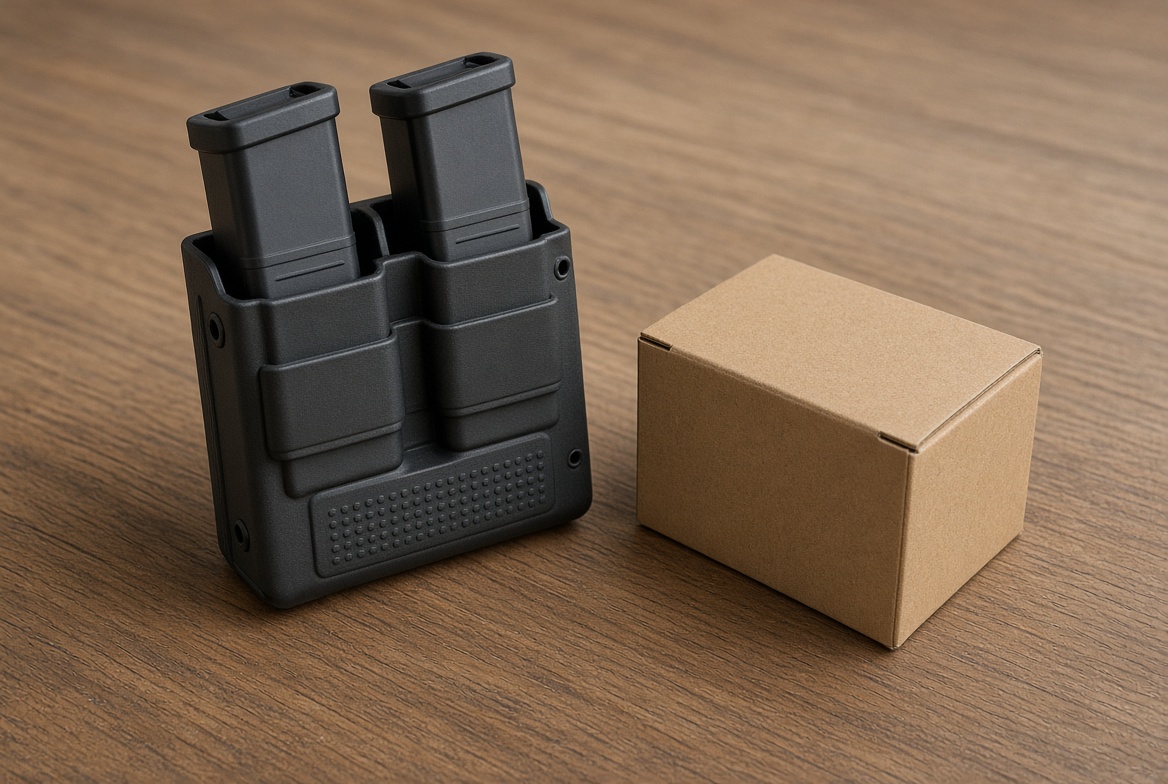
Ammunition rides in checked baggage only. Pack it in a box made for ammunition: fiber, wood, plastic, or metal. Small arms ammunition is up to .75 caliber, and shotgun shells of any gauge are allowed if packed that way. Magazines and clips, loaded or empty, must be boxed or ride inside the hard-sided case with the unloaded firearm. A magazine does not count as ammunition packaging unless it completely encloses the rounds.
- Unload the firearm. No round in the chamber or cylinder, and no magazine inserted. TSA treats a firearm as loaded if a live round, or any part of one, is in the chamber, the cylinder, or an inserted magazine. For a civil penalty, TSA also treats it as loaded if you can reach both the firearm and the ammunition without unlocking or opening anything.
- Put the unloaded firearm in the hard-sided case. A cable through the action is optional and wise. Magazines and the ammunition box go in the same case.
- Lock the case. Tug it. If a finger can get inside, it is not locked enough.
- Carry two keys, or know the combination cold. One on your ring. One somewhere you will not lose it. You keep them. TSA may ask to open the case. If they cannot reach you, the case does not fly.
- Do not check a firearm at the curb. Walk to the ticket counter.
- Use your inside voice. Smile. Say, "Hello. I need to check in, and I need to declare an unloaded firearm in my checked bag."
A driver's license, a carry permit, or law-enforcement credentials may calm a nervous clerk. None of that is required for the declaration itself. You must declare each firearm, each time.
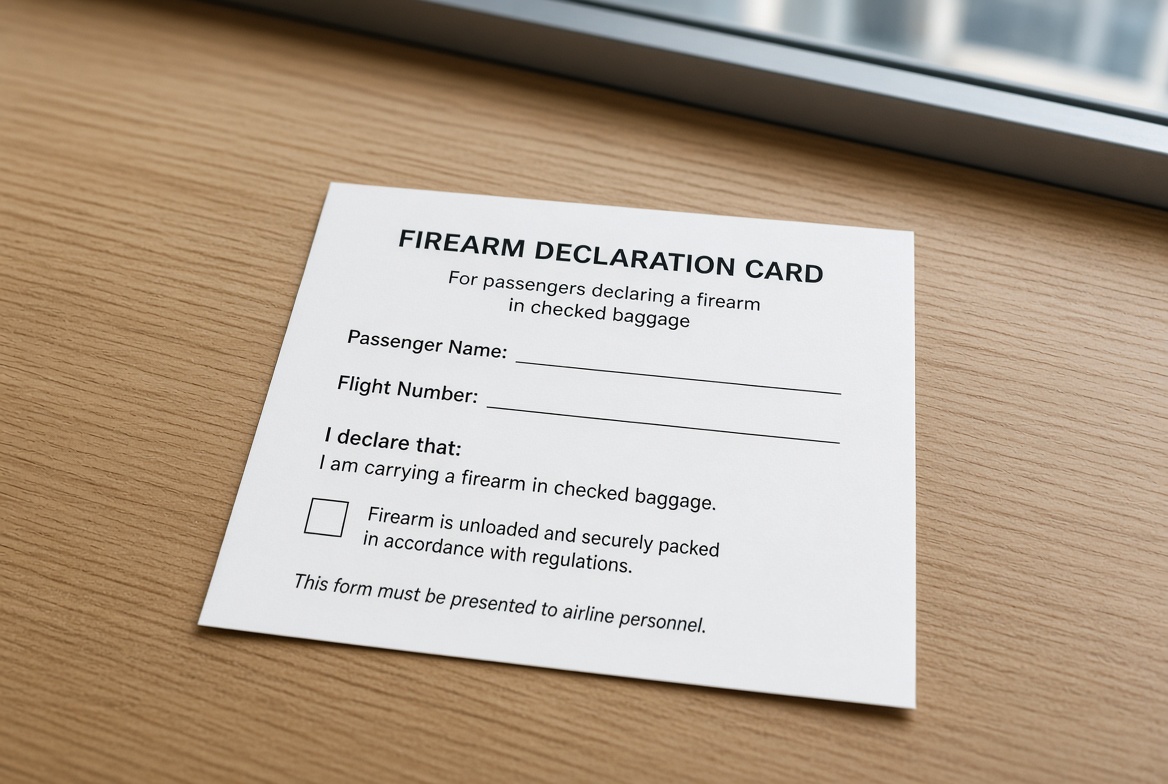
The agent should hand you a declaration card. Fill it out. It goes inside the case, not on the outside of the bag.
- If the agent hesitates, produce the laminated sheet. Their policy and the TSA page, in your hand.
- Show the unloaded firearm and the packed ammunition when asked. Place the signed card in the case. Some airports want it locked again in front of them. Do what that counter requires.
- Let them tag the bag as ordinary luggage. Be ready to give them one of your spare printed copies, they might ask.
- You may be walked to a firearms screening point. At some airports a TSA officer takes the case, has you unlock it, runs it, and watches you lock it again.
If someone tells you a magazine pouch is not an approved ammunition container, they may be right about the pouch and wrong about the case. Ammunition belongs in a box made for it, inside the locked hard-sided case. Be polite. Honey still beats vinegar. If the answer is no, ask for a supervisor.
- Offer TSA the last spare copy of the printed rules.
- Repack, lock, and place the case in the checked bag if that is how this airport does it. A small locked case may ride inside a larger checked bag. A long gun usually travels in its own locked hard case.
- Check the bag tags. More than one, with a way to reach you.
Do not let anyone put a sticker on the outside of the bag that says firearm, gun, or anything like it. Federal law says a carrier shall not require or cause any label, tag, or written notice on the outside of the container saying it contains a firearm.
- The bag goes to the belly of the plane. At the other end it should be on the carousel, or held for claim if that airline does it that way. Check the bag and the case before you leave the hall. Do not open the firearm in public.

- Once you are outside the secure area, and only if the law where you landed allows it, find a private place and secure the firearm the way you mean to carry it. A parking garage, when you think you are alone, is a bad place to do this.
The trip home is the same process. Declare it again.
Two more things the counter will not always mention. Firearm parts, including magazines, clips, bolts, and firing pins, are prohibited in carry-on baggage. Replica firearms travel in checked baggage only. Laws on possession change by state, city, and country. If you are leaving the United States, read the Customs and Border Protection rules before you pack.
Enjoy the flight.